
2 – 12 players and 30-45 mins.
To what extent is Haribo for kids or for adults? Is a parrot an exotic pet or actually quite a normal one? Are skirts masculine or feminine? Be prepared to discover some new perspectives from friends, or to justify your ‘obvious’ clues to them!
How do you win?
Win points by getting your teammates to guess the correct location on a scale between two extremes using just one clue. The first team to reach 10 points wins!
How do you play?
Divide into two teams.
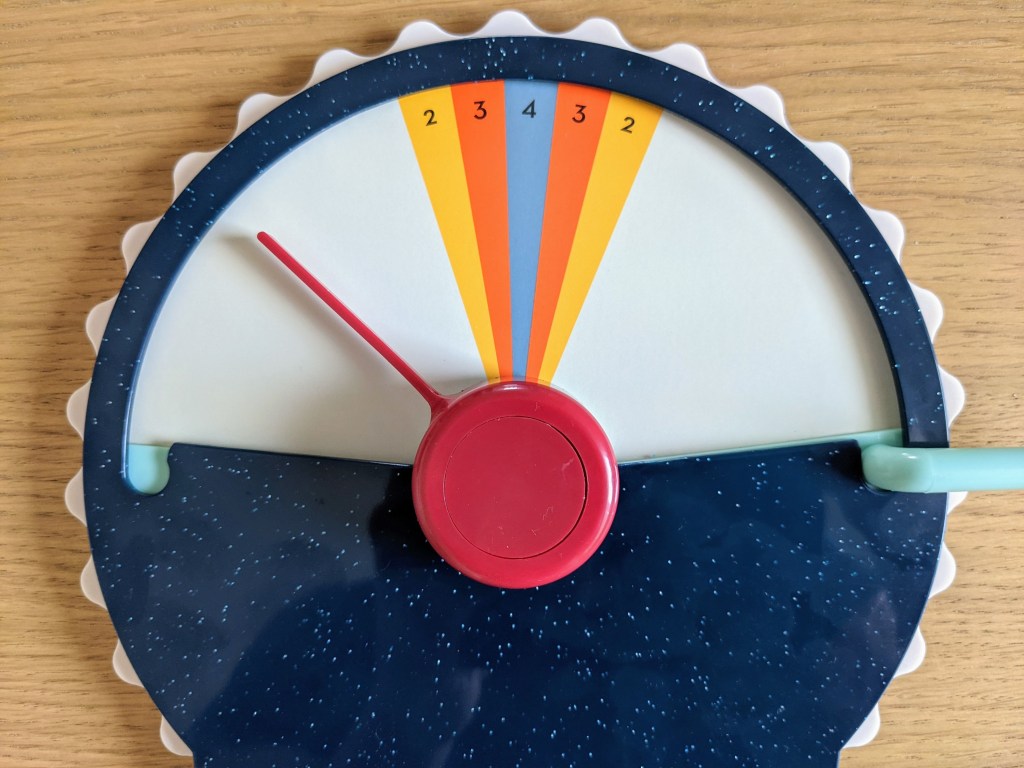
One person on the first team draws a card which will define a scale for the board, such as ‘hot’ to the left and ‘cold’ to the right, or ‘for kids’ on one side and ‘for adults’ on the other. They then place the card at the front of the wheel and set up the spinning device by closing the covering window, spinning the white wheel to randomise the ‘target’ zone, then re-opening the covering window.
The player must then say a word or phrase which they hope will indicate to their teammates where the target slice is located, then stay silent for the remainder of the turn. After hiding the location of the target with the covering window, the clue-giver shows their team the spinning wheel, and the discussions begin!
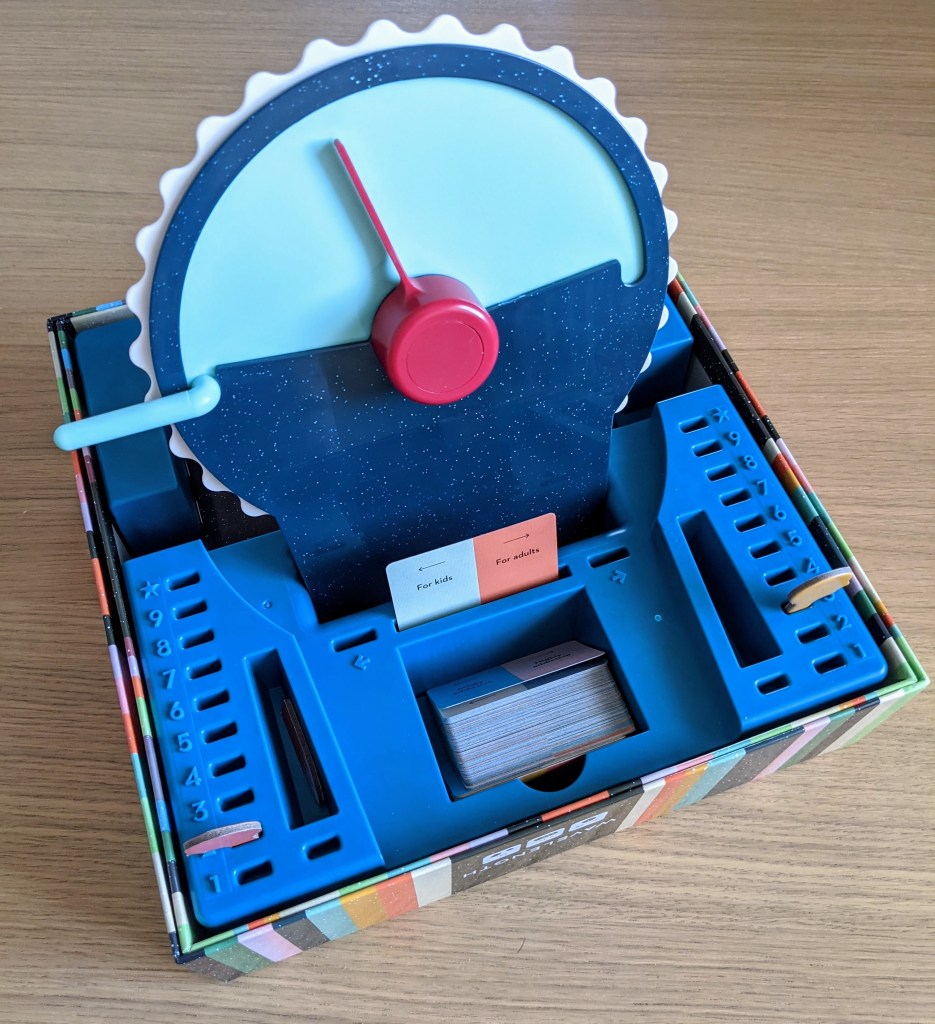
The team will then decide where to move the red target marker according to the clue. In the case of ‘for adults’ vs ‘for kids’, the clue may have been ‘doing taxes’, which suggests moving the dial to the far right-hand side. Alternatively, saying something such as ‘plastic ball pit’ would suggest moving the dial more towards kids (“but I love ball pits!”, one adult team member will inevitably pipe up). If the target were somewhere more central, a more nuanced clue which could apply to either side would be needed such as ‘Haribo’ or ‘video games’.
Once the team has guessed a location for the red dial, the other team gets the chance to earn a bonus point by guessing whether the 4-point marker is located to the left or right of the first team’s guess. The screen is then revealed and points are awarded.

Play then switches to the other team, with a different person acting as the clue-giver on each round.


Why play it?
Although the rules can seem a little complicated at first glance, trust us – gameplay is actually quite straightforward! It’s novel how the giant wheel fits neatly into the box, which can be passed around the group.
Since Wavelength is a word-based game, it’s highly replayable. Even an ‘obvious’ clue can be interpreted completely differently by someone else or at least debated fiercely among the group! There is a lot of fun in seeing how your clues are explored, even if sometimes, frustratingly, your team talk themselves out of the right answer!
If you know the other players well, then a new depth of knowledge can really develop for each clue during the gameplay, as in-jokes and personal interests creep in!
Verdict?
An enjoyable and highly replayable word-based boardgame which holds up very well with many players or as a smaller ‘two vs. two’ type game. A co-op version also exists for 2–5 players and it’s worth playing this version for the first couple of games to introduce new players.
 Cards on the Table