
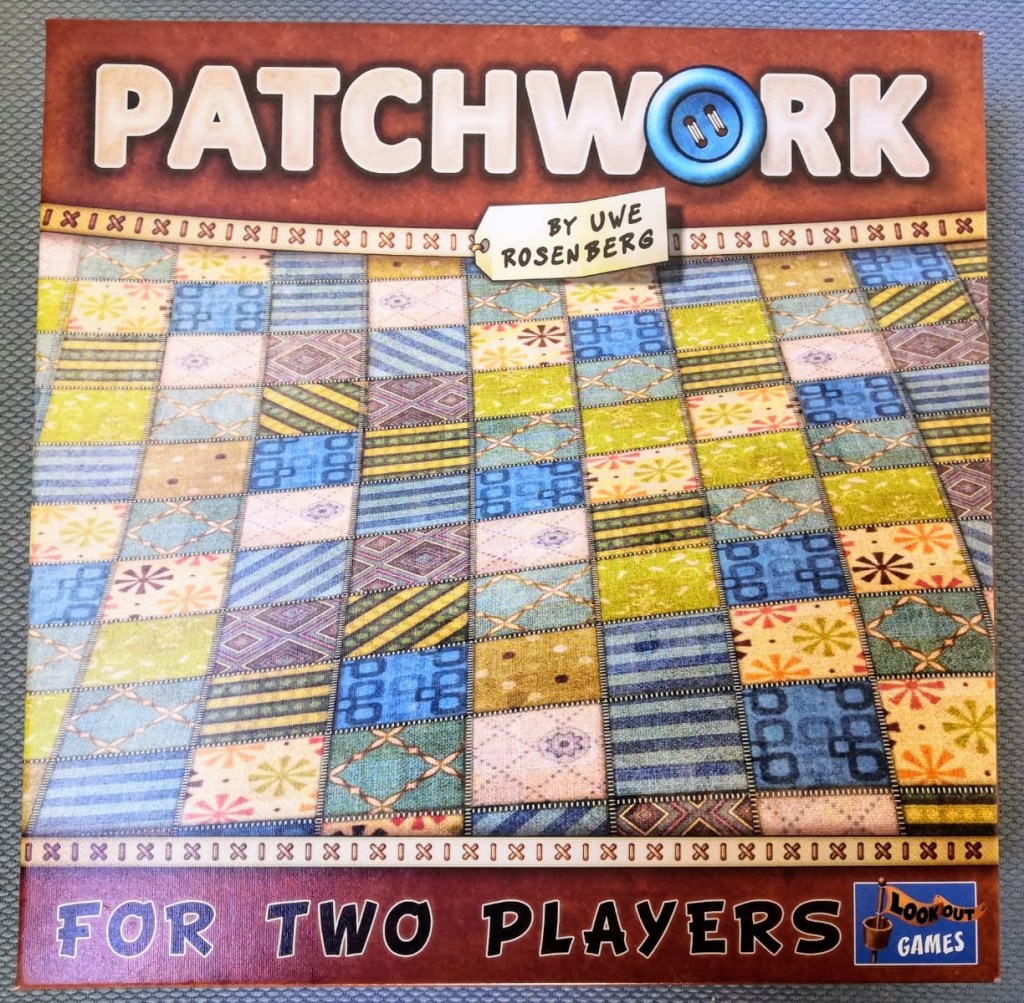
2 players and 25 mins.
Quilting may seem an unlikely premise for a competitive two-player board game, but don’t be fooled: while Patchwork delivers the creative zen you’d expect from a game based on quilting, it also has a competitive edge that makes it extremely enjoyable to play – it’s difficult not to be drawn into quilting rivalries!
How do you win?
Carefully select the best patches to fill up your quilt board during the game. A large quilt with fewer gaps means less points deducted from your score at the end of the game. The player with the highest score wins!
How do you play?
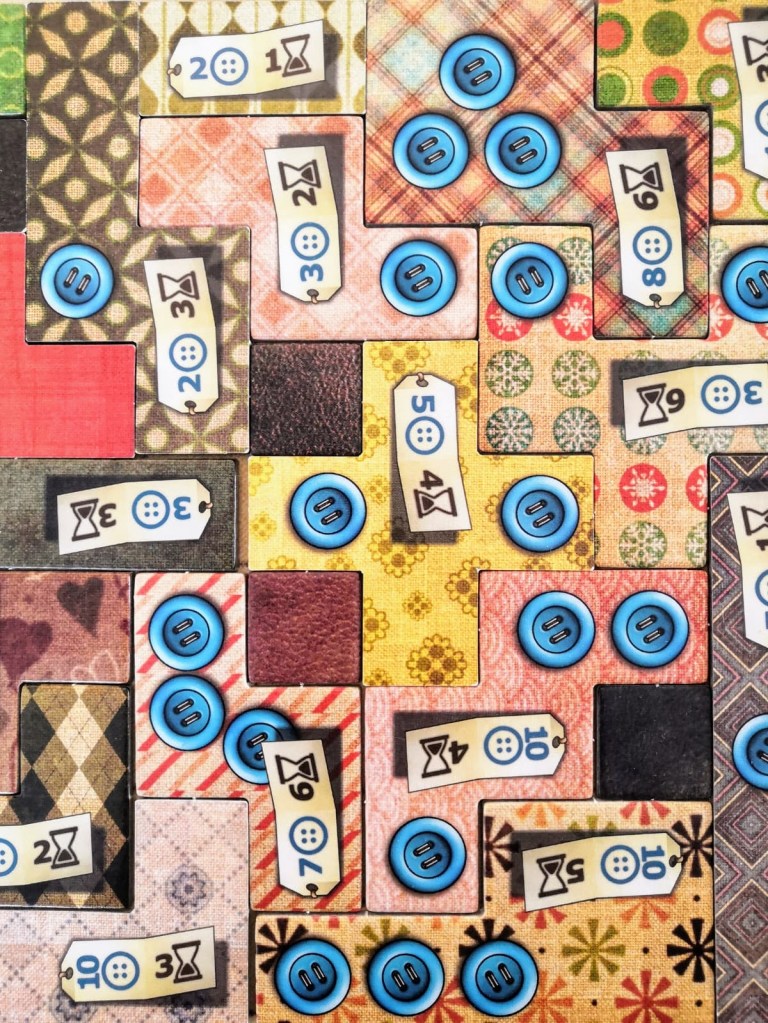
Each player is aiming to complete their quilt by selecting and placing Tetris-like patches on their own nine-by-nine grid, aiming to leave as few gaps as possible. Each patch will cost you a certain number of buttons (the currency in the game) and some of your ‘time’, i.e. a number of spaces that your token must move towards the end of the central game board (and therefore the end of the game).
The patches that the players will use to make their quilts are spread in a circle around the central game board and are different shapes and sizes; some may be a bargain in terms of time or buttons but the patch may be an awkward shape to fit in the quilt, while more expensive patches may result in a payout of precious buttons later in the game, making them worth the investment.
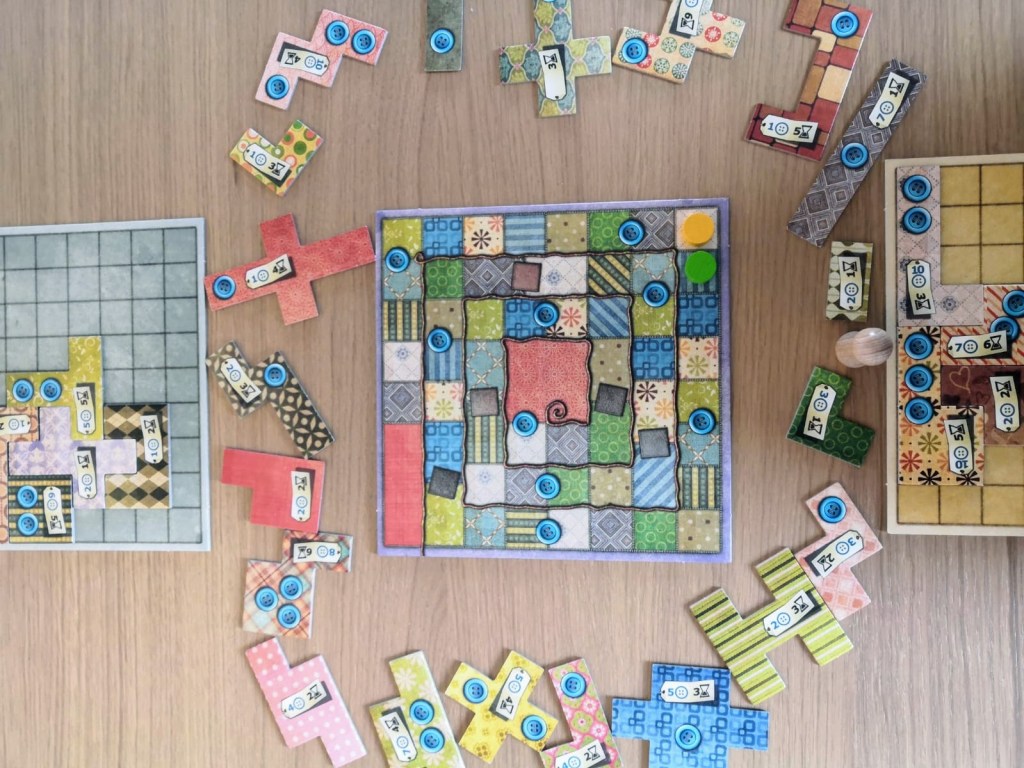
Interestingly, players do not necessarily take turns to add a patch to their quilts, since the player whose token is further behind on the central game board keeps placing pieces on their quilt until they overtake the other player. This keeps the game nicely balanced when someone chooses a large, ‘time-expensive’ patch which moves their token forward a few steps, since the other player is able to place a few smaller pieces.
The two tokens follow a path on the central board, with special bonuses triggered when a player’s token passes either a button or leather patch. A button payout awards buttons to a player according to the number of buttons that appear on their quilt, while each leather patch is awarded to the first player to pass it, allowing them to mend a gap in their quilt.
Once both players have reached the end of the board they tot up the total number of buttons in their possession, deducting two points for every gap in their quilt. The player with the most points wins!
Why play it?
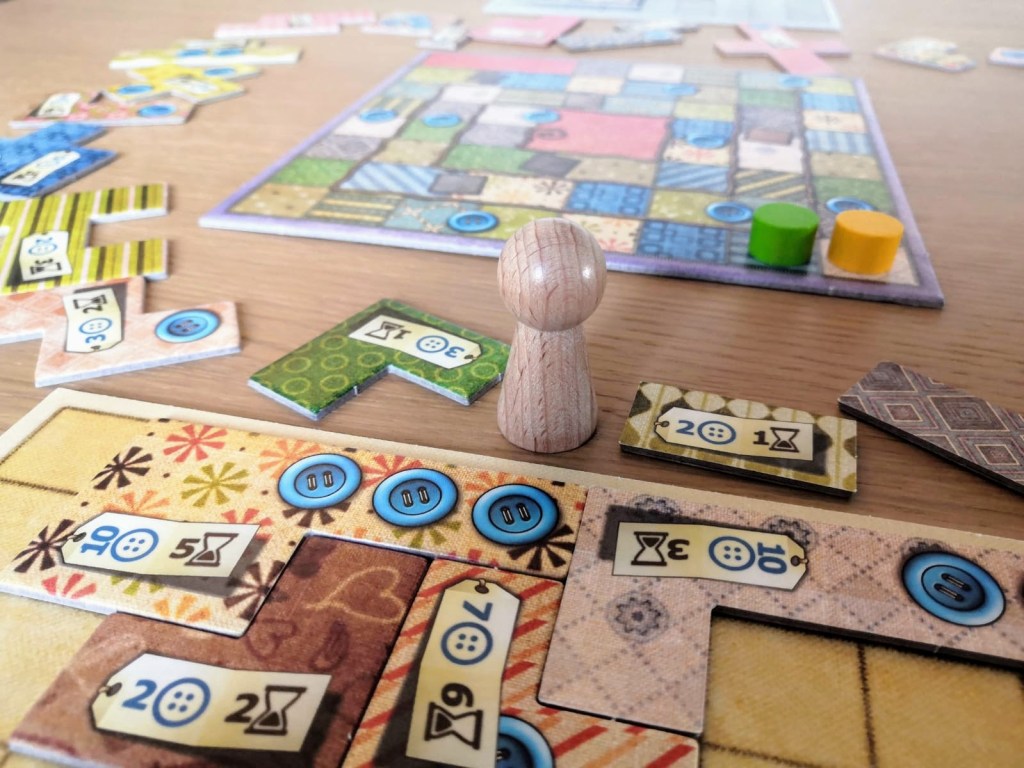
Patchwork is a fun, relaxed game that is easy to get the hang of. Piecing together your Tetris quilt is a creative challenge, although it soon becomes clear that there’s more to the game than rushing to claim the bigger, cheaper patches; this approach will leave you with awkward gaps to fill and a quilt that has more holes than a Swiss cheese! A wiser approach is to hoard your buttons and splash out on the pricier patches that can secure a hefty button payout later on – while keeping an eye on your opponent to ensure they don’t pip you to the post.
The balance between the two resources (time and buttons) is fine tuned to keep both players neck and neck, meaning everything is left to play for even if one of you is running low on buttons or if one token is much further behind on the central board. This usually makes for a close score at the end of the game, making it likely that the victor will be challenged to a rematch!
Verdict?
A firm favourite and our go-to two-player game. It works very well as a game for two players, partly because it was designed with this in mind, where other games seem to provide a two-player option as an afterthought. It’s surprising how competitive quilting can be!
 Cards on the Table