

3–6 players and 15–45 mins.
Cigarette smoke lingers in the air. Glasses are nearly empty and the room is silent.
“Five…” “Pass…” “Pass…”
The first man begins to turn over the other players’ beer mats. He reveals a flower. Then a second flower. He mulls over which to choose next. He hesitates. Then casually flips over his third choice and reveals a…
S K U L L.
And with that he is cursed. And out the game.
How do you win?
Reveal as many cards as you bid without revealing a skull card to win a round. Win two rounds and you win the game.
How do you play?
Each player has a hand of four beautifully illustrated cards which consist of three flower cards and a skull. The first player puts one of their cards face down on a mat in front of them. Moving clockwise, the next player then places a card of their choice face down. Once play returns to player one, they now have a choice: either lay a second card on top of their own or begin the bidding.
Bidding means stating how many cards you think you can turn over without revealing a skull card. Once a player begins bidding, play moves clockwise as each player is allowed to either pass and bow out of the round or increase the bid by at least one card. When the bid reaches the total number of cards in play or all players have passed, then the player who won the bid begins to reveal cards.
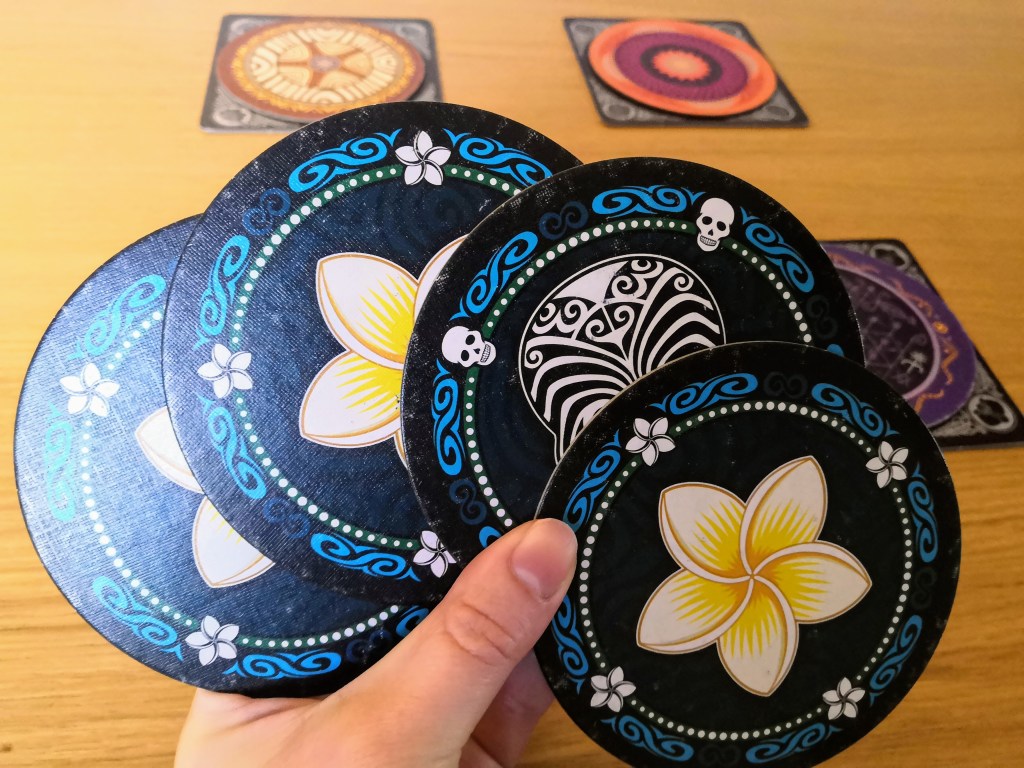
They reveal their own card(s) first, then choose cards from any other players, from the top of their pile down. They do not have to take all the cards from a player; they may alternate between players, but they must turn over the number equal to their bid in order to win the round. However, if a skull card is revealed, even from their own pile, they immediately lose the round and a card is permanently discarded from their hand at random.
Why play it?
Skull is an intriguing little bluffing game which works perfectly with a few drinks on a late night. It’s not hard to believe the stories of the game’s origins, being played on beer mats by bikers or by adventurers in exotic lands.
Things begin calmly during the laying phase, with people playing mind games and acting casual as to when or if their skull is being placed. While keeping a keen eye on the other players, you have to decide whether to place your own.
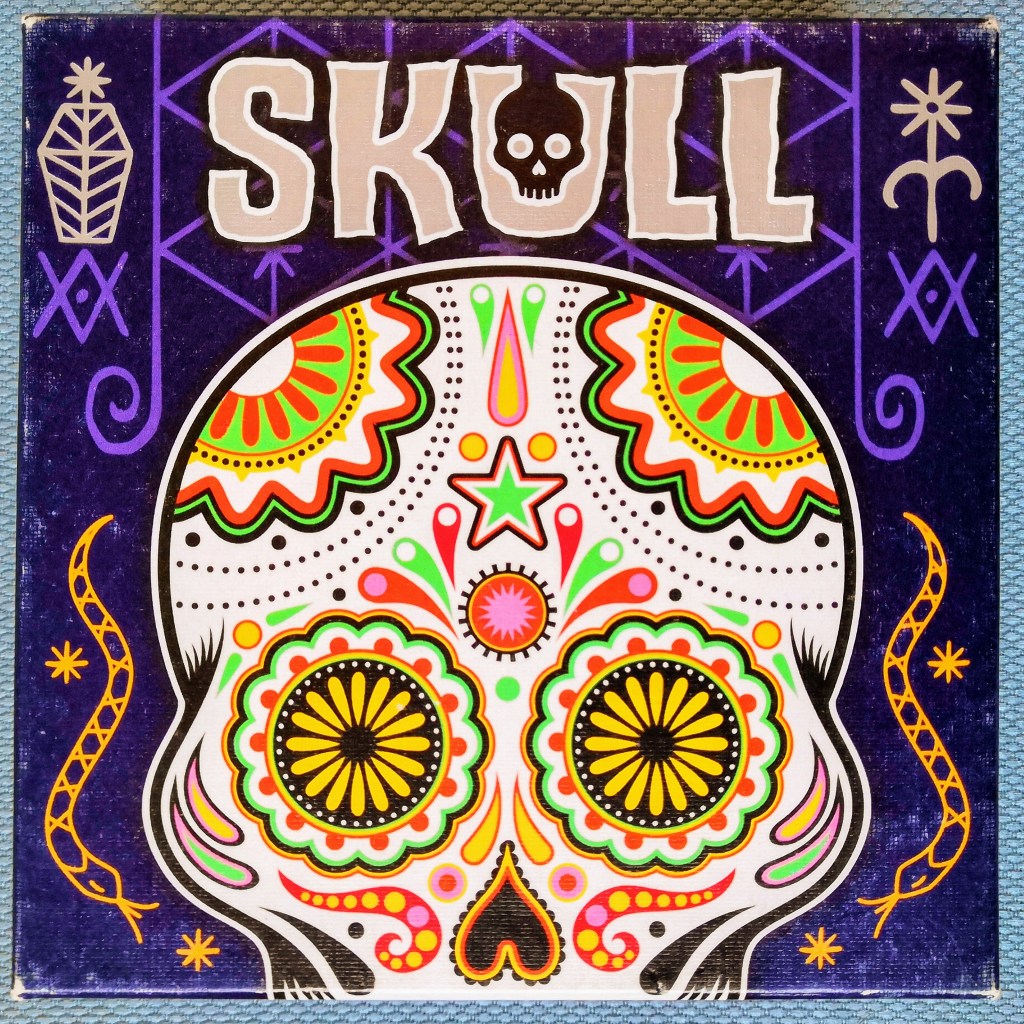
The moment bidding begins, the game is suddenly tense. A second player snaps with a higher bid. All the other players start to analyse…
Can they do it? Are they bluffing? Whose cards would they choose to uncover? Could I beat them?
Then after much deliberation, the next player ups the bid. They are now the centre of attention.
Are they just bluffing? I think they can do it! Why didn’t I lay my skull for them?!
Once a player wins the bid, the tension lingers as they reveal cards. You may desperately hope for them to discover your earlier laid trap of a skull and all will rejoice if they do! Other times the group is shocked when it is revealed there were no skulls after all – and the losing players are left wishing they had followed their instincts and continued to bid!
One of the highlights of the game is definitely if a player wins a bid they don’t actually want to win, after trying to look keen during the bidding phase so as to lure somebody in. This gamble can leave them cursing themselves with their own skull!
Verdict?
Skull is a highly replayable and enjoyable game which replicates the bluff and tension of a poker game with a simple set of rules – and a little luck thrown in.
 Cards on the Table