
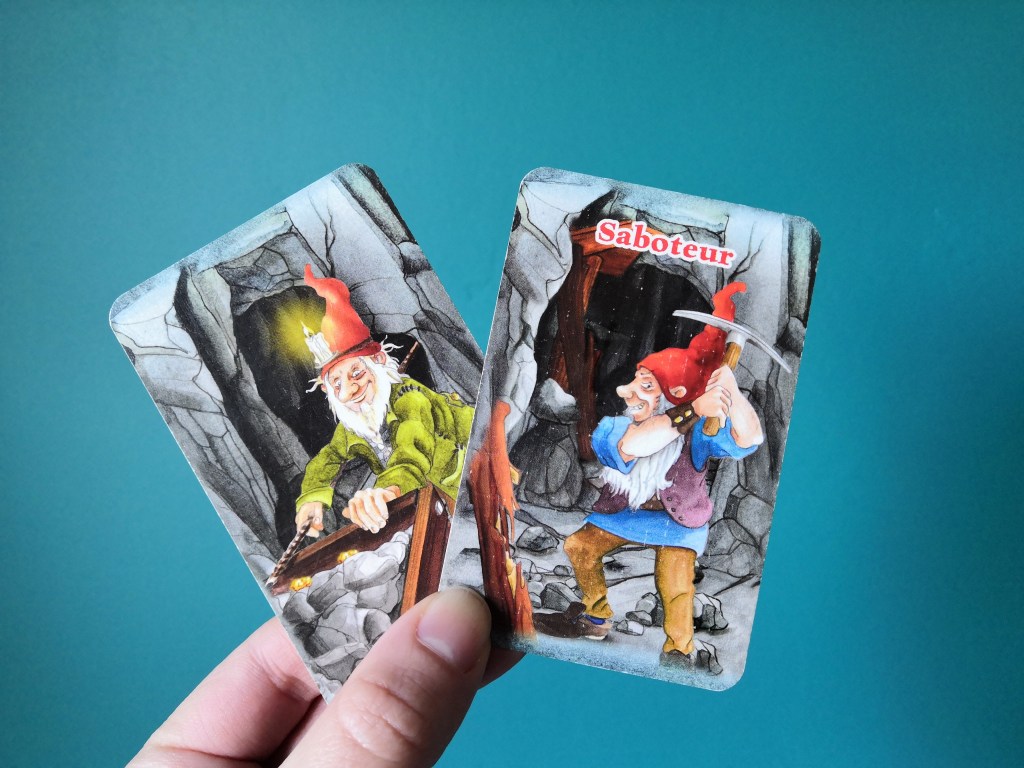
3–10 players and 30 mins.
There are rumours that gold lies under the mountain, and a team of dwarfish miners is determined to find it. They are working together to tunnel towards the gold, but there’s a catch: one or more saboteurs want to lead the group astray so that they can claim the treasure for themselves. Will the saboteurs successfully pull the wool over the eyes of the miners and keep them from their prize?
How do you win?
For the miners: Tunnel until you reach the coveted gold, avoiding the two lumps of coal if possible!
For the saboteurs: Ensure that the miners don’t reach the gold.
How do you play?
At one end of the tunnel is the mine entrance, and at the other are three face-down cards: one is the gold, the other two are coal. Players take it in turns to lay a tunnel card, starting from the mine entrance and gradually building a path towards their goal. The tunnel cards include helpful cards like crossroads, as well as dead ends, twists and turns. Each player has been dealt a role, which they keep secret: most players are well-intentioned miners; they want their tunnel to reach the hidden gold. The saboteur(s), on the other hand, win if the tunnel cards run out and the gold cannot be reached.
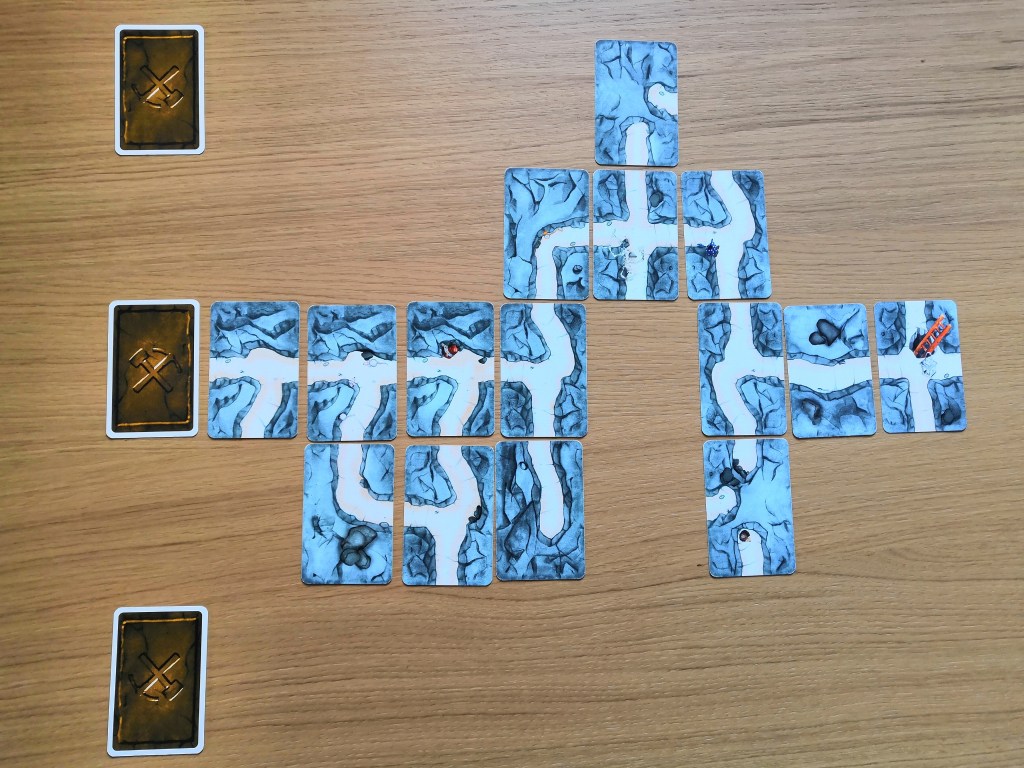
So, where does the sabotage come in? Well, the saboteurs can take advantage of a few things. Instead of laying a tunnel card, you can play an action card. One of these, the ‘map’ card, lets you peek at one of the three prizes you are mining towards – whether you tell the truth about the location of the gold is up to you! ‘Rockfall’ cards let you remove one of the cards that makes up the tunnel, forcing the miners to rebuild by finding a tunnel card that fits the gap. Players also have the option to discard a card from their hand face-down instead of building the tunnel, allowing good miners to get rid of any awkward tunnel cards and saboteurs to ensure that handy crossroad cards go unused. Finally, any player can lay a ‘curse’ card in front of another player; these cards prevent them from laying more tunnel cards until they are released from the curse by another player (or by themselves).
Why play it?
Part of the fun of the game is working out the identity of the saboteur(s) – did that player lay a tunnel card that forces us to the right to lead us away from our destination, or were they making the most of a bad hand? Two players have used a ‘map’ card to peek at the same card, but one claims it is coal while the other insists that it is the gold – who is more trustworthy?
Being a saboteur is just as enjoyable; unusually for a bluffing game, you begin the game not knowing who else is on your team, so working out which other players (if any) share your ambition of failing the mission will be the first part of your challenge. You have plenty of options for sabotaging the rest of your team; the key is to balance the havoc you can wreak against the benefits of keeping your identity hidden for the time being and winning the miners’ trust.
The best games are the ones where uncertainty reigns and curses are flying left, right and centre; if the saboteurs play their cards right (no pun intended, honestly), they get the miners fighting among themselves so that they can sit back and let the chaos do their job for them.
Verdict?
It’s difficult to resist getting drawn into a game of saboteur. Best played with more players (maybe 7 or 8), as this allows two saboteurs to work together.
 Cards on the Table